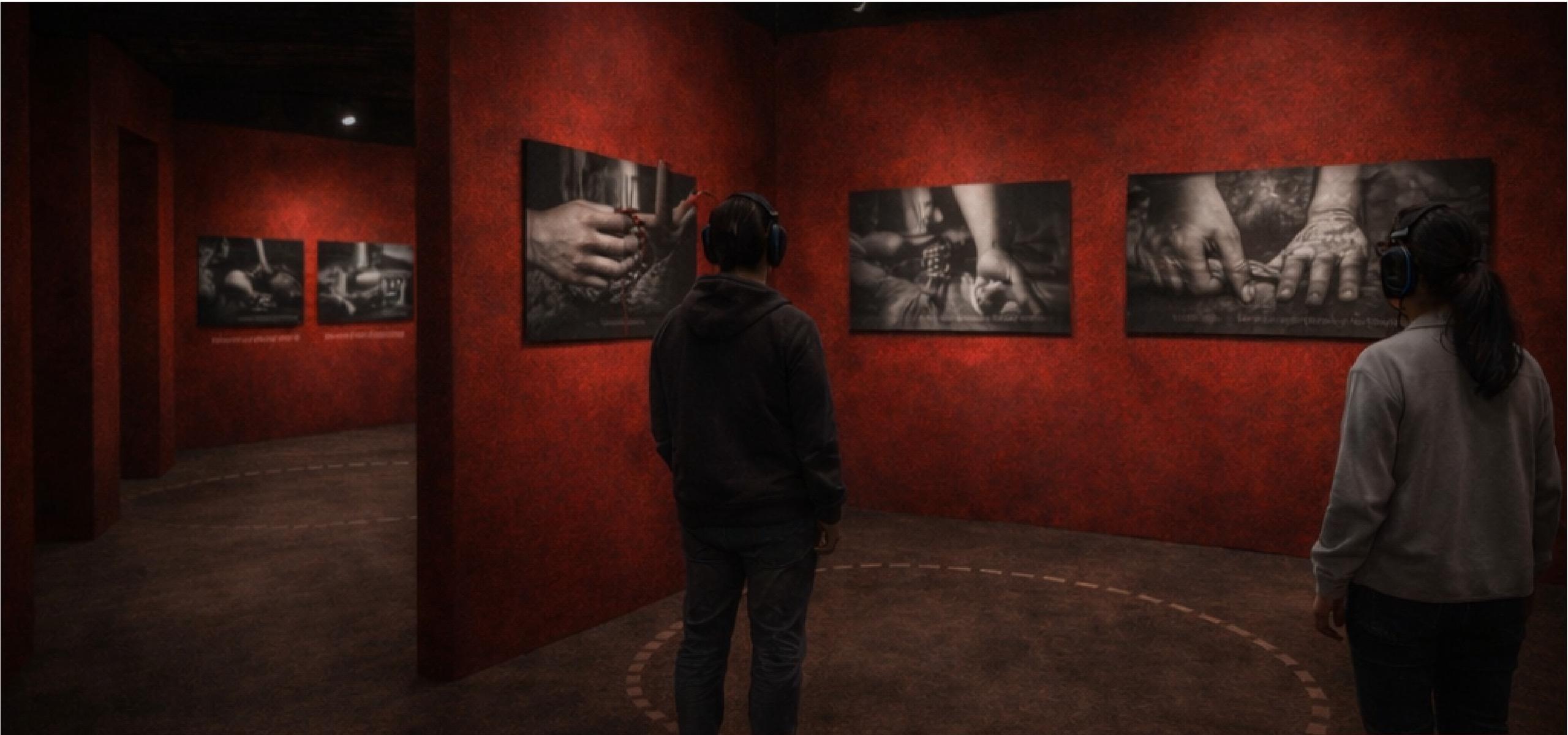
The Gestures
The visitor enters a room of photographs. Large-format images hang on off-white walls at standard gallery height — ordinary people, ordinary moments, ordinary light. A woman at a kitchen counter. A man on a subway platform. A teenager in a bedroom. An elderly person at a window. At the entry, a headphone station. The visitor takes a pair and enters.
Each photograph has a proximity trigger. As the visitor approaches an image, audio begins — the voice of the person in the photograph, speaking in their own language, describing what the image shows. Not a caption. Not an explanation. A description from the inside — how the gesture started, when it happens, what it feels like to do it, what it feels like on the days it cannot be done. When the visitor steps back, the voice fades. When they move toward the next image, another voice begins.
The photographs show superstitious practice. The audio makes it personal. Together they produce an encounter that neither element could produce alone — the image gives the gesture a body, the voice gives it a life. The visitor moves through the room at their own pace, drawn by whatever catches their attention, accompanied at each photograph by the specific private logic of the person in it.
The room
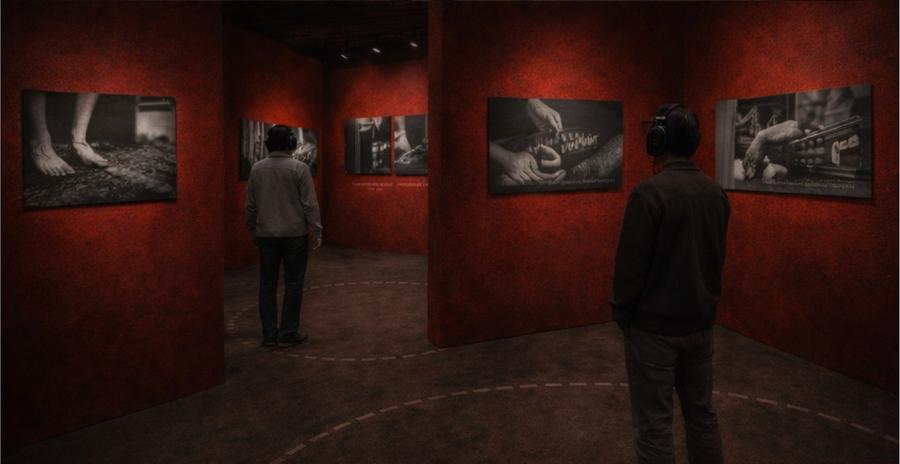
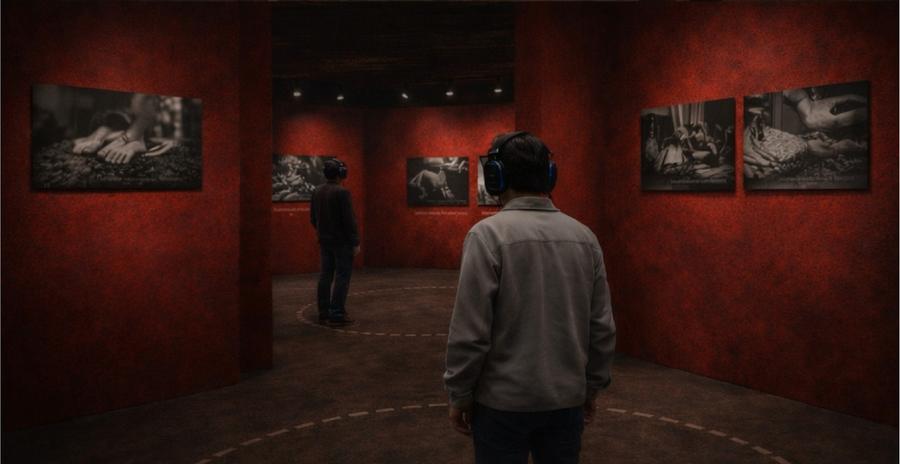
The photographs document superstitious practice across a deliberately wide range of people — different ages, genders, backgrounds, professions, cultural origins. An elderly Indian woman arranging objects on a windowsill before the morning begins. A young Black man touching a specific spot on the door frame of his apartment before leaving for work. A white middle-aged woman in a business suit crossing her fingers under a conference table. A teenage girl blowing on her phone before opening an exam result. A Japanese man bowing very slightly to the elevator before pressing the button for his floor.
None of the photographs carry captions. No name, no location, no description of what is happening. This absence is not accidental.
The photographs are large format — approximately 100 × 80 centimetres — printed on matte paper, mounted without glass.
The absence of glass removes the reflective barrier between the viewer and the image. The people in them are present in the room at approximately the scale of life, without the separation that glass imposes. The installation treats them as people rather than specimens. The scale insists on this.
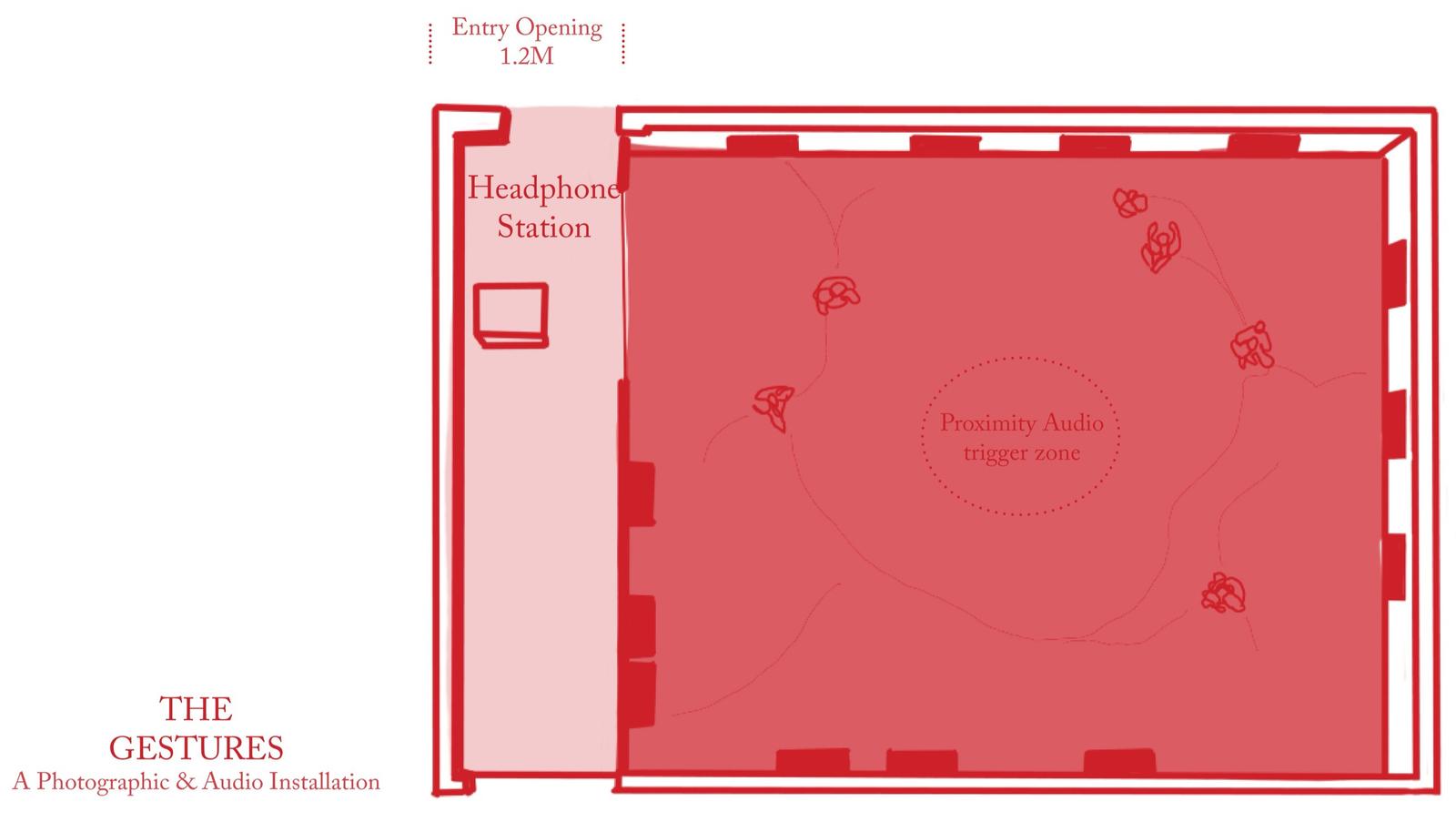
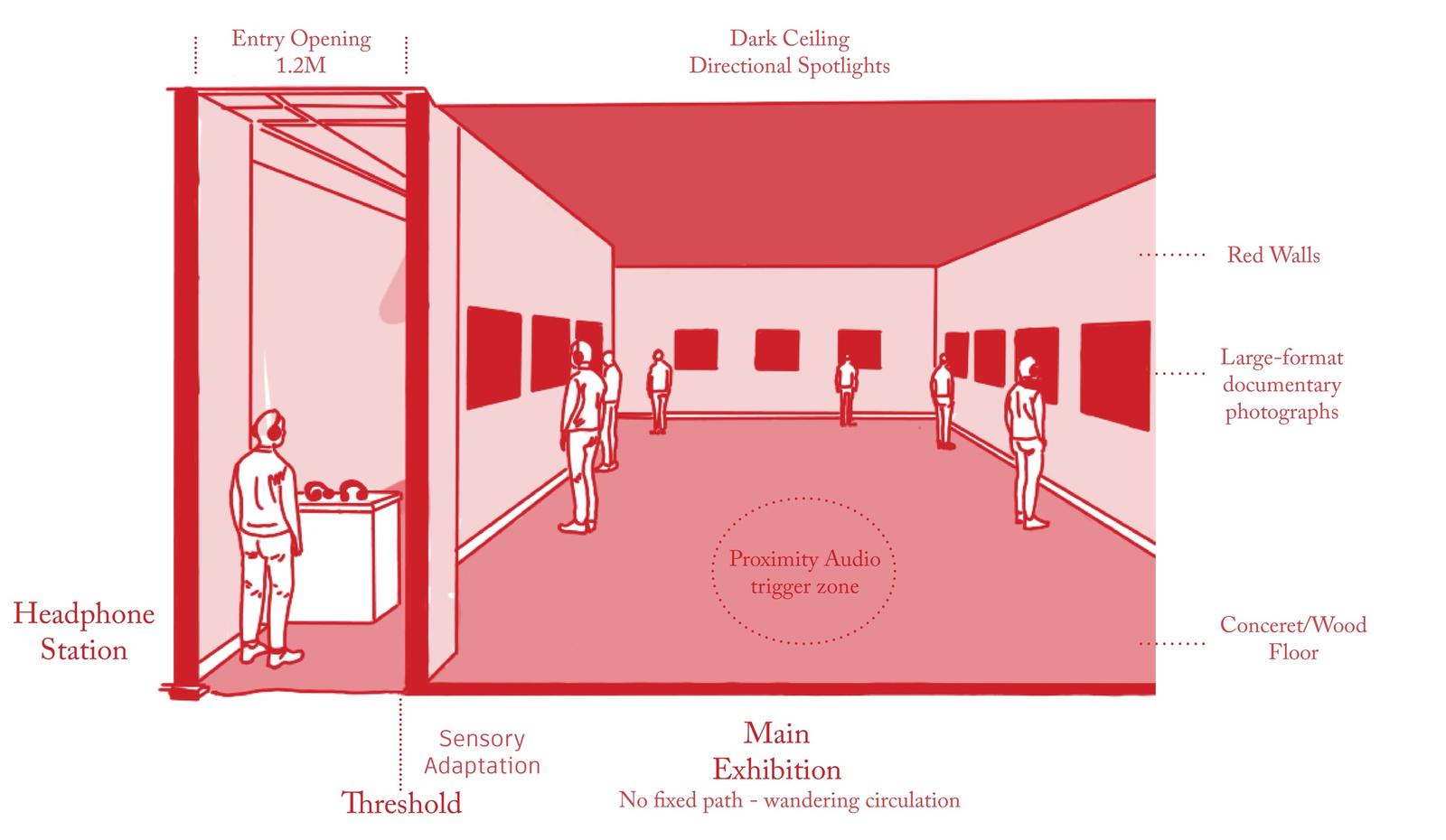
Plan & threshold
The headphones change everything. Each photograph has a proximity audio trigger zone — a radius of 70 centimetres around the centre point of the image, invisible on the floor. When the visitor wearing headphones enters this zone, audio begins to play. When they step outside the zone, it fades. There is no visual indication of the zone.
The visitor discovers it through movement — through approaching an image and noticing that something has begun in their ears. What plays is not a caption and not an explanation. It is the voice of the person in the photograph, recorded in their own language with translation available but not imposed, describing the gesture the photograph shows. Not explaining it analytically — describing it personally. How it started. When it happens. What it feels like to do it. What it feels like on the days it cannot be done.
Not understand. Feel.
The Gesture is the installation that most directly demonstrates the thesis argument about invisibility. The practices in the photographs are real. The people performing them are real. The gestures are invisible in the images not because they are hidden but because the viewer’s interpretive frameworks do not register them as significant. The audio removes that invisibility — not through explanation but through voice, through the specific intimacy of someone speaking directly into the ear in a quiet room, describing what the gesture feels like from the inside. This is the argument of the dictionary made spatial.
The dictionary names the practices. The installation shows them on the bodies of real people and then makes the viewer feel what the practices are for. Not understand. Feel.
The photographs also collectively demonstrate the cross-cultural universality argument of Chapter 3. An elderly Indian woman and a young Black man and a middle-aged woman in a business suit are, on the surface, entirely different people with entirely different lives. The audio makes clear that what each of them is doing is structurally identical. The emotional need is the same. The specific gesture is theirs alone. The installation holds both of those things simultaneously — the universal structure and the irreducibly individual form — which is the most precise spatial translation of the thesis argument available.